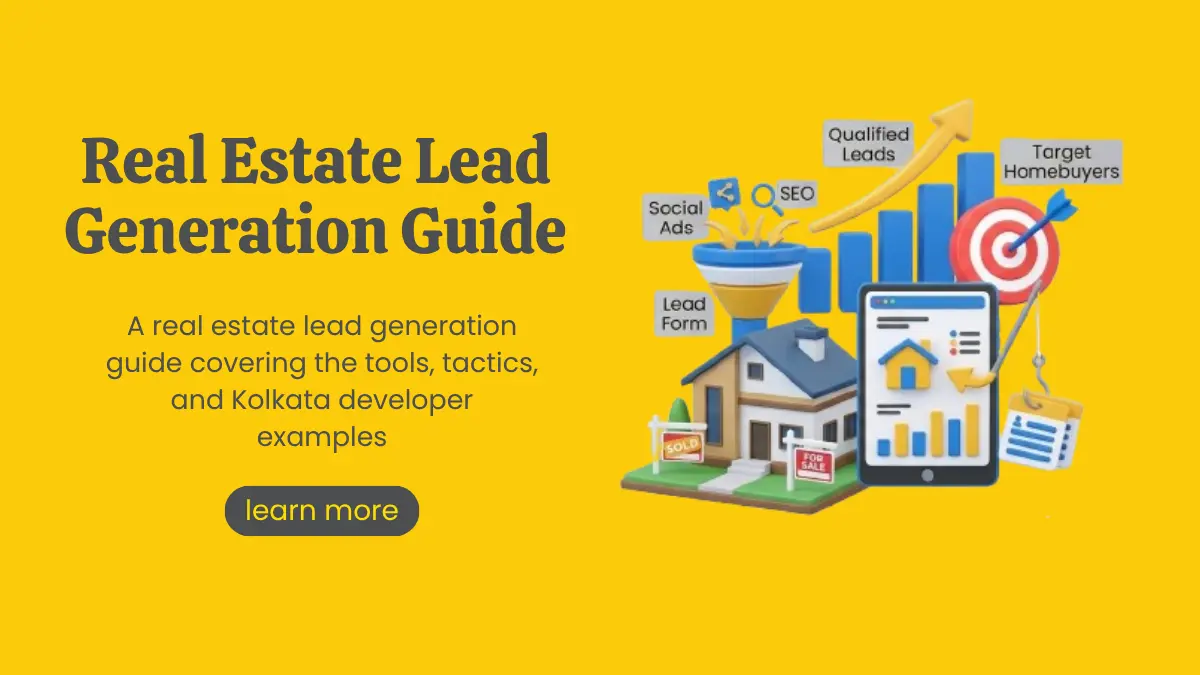
Real Estate Lead Generation Guide: Tools, Tactics & Examples
Summarize with AI


A 2026 industry survey of over 450 working agents found that 13 of 21 marketing channels deliver zero leads to more than 70% of the people paying for them in a typical month (Knwn Local, Beacon & Listing Leads, 2026). Demand for property hasn't dropped. Most developers and brokers are just pointing their budget at the wrong tools.
This guide breaks down the tools and tactics that actually produce booked site visits, not just form fills, using real work we've done for developers like Vinayak Group, Somani Realtors, and Sugam Homes. Read this before you spend another rupee on generic real estate ads.
The Real Problem Isn't Demand, It's Waste
Across paid digital and property portals specifically, the average zero-lead rate sits at 82%. Meanwhile, buyer behaviour has moved almost entirely online, and cold outreach barely works anymore.
What's broken is how most developers and brokers try to capture demand: one generic landing page, one broad ad set, and a hope that volume fixes conversion. It doesn't. We see this exact pattern in almost every developer's ad account before they come to us.
Who We Are
We're Marko & Brando, a full-funnel digital marketing agency in Kolkata, and real estate is one of the sectors we've worked in the longest. We've run lead generation, website builds, and paid media for developers and constructors, including Vinayak Group, Somani Realtors, and Sugam Homes, handling performance marketing, UI/UX, SEO content, and social media under one roof. We don't hand over a report and disappear. We sit inside the funnel with our clients, from the first ad impression to the site visit booked, because in real estate, a lead only counts once it becomes a serious buyer walking through a project.
The Vinayak Group Project: What Integrated Execution Actually Looks Like
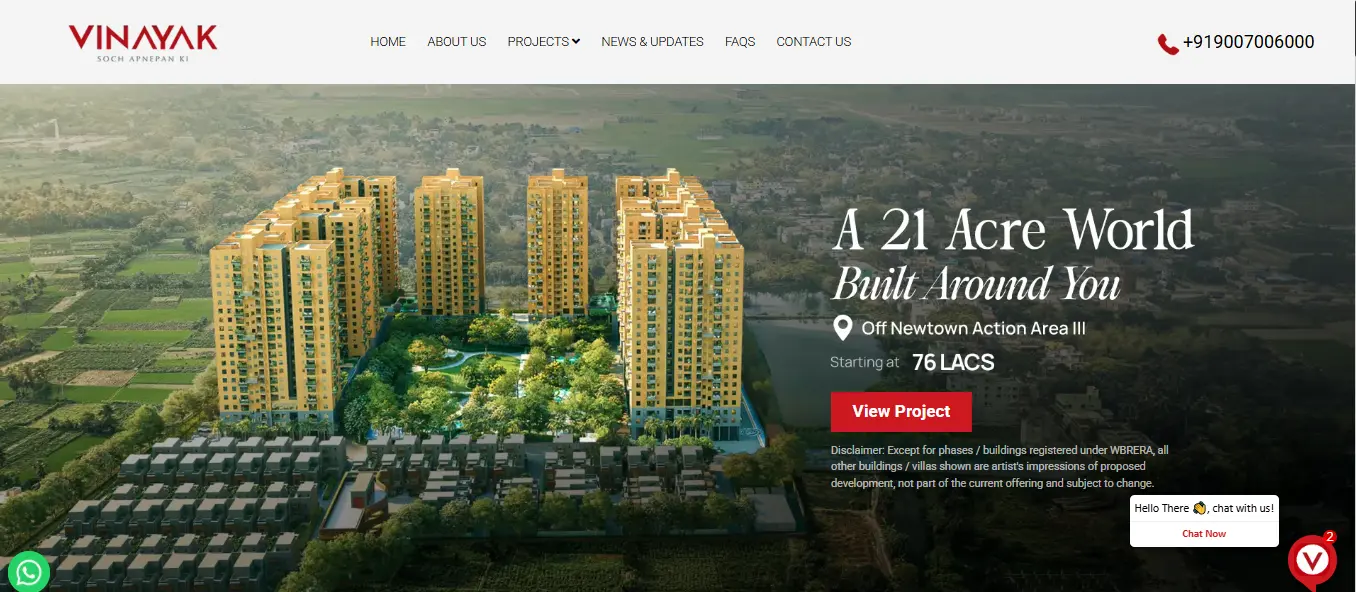
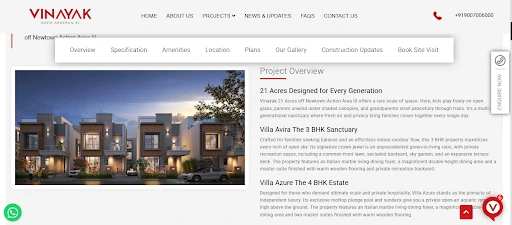
When Vinayak Group came to us for their flagship project, Vinayak 21 Acres in Newtown, the brief wasn't "run some ads." It was "get serious buyers into a market flooded with generic developer promotion." Vinayak 21 Acres is a large project: five towers, G+21, over 750 homes, a 3-acre central park, and IGBC Precertified Platinum status. A project at that scale can't be sold with one landing page and a boosted Facebook post. It needed the website, the ad strategy, and the content to work as one system.
Performance Marketing
We built layered Meta Ads campaigns targeting buyers by budget and configuration, from 2BHK compact units to larger 3BHK layouts, instead of running one broad "flats for sale in Newtown" ad to everyone. Google Search campaigns captured high-intent terms buyers were already typing, like specific configuration and locality searches. Every campaign was wired into Google Analytics 4, so we could see which ad and which landing page actually produced a site-visit booking, not just a click. That data is what let us cut underperforming ad sets fast instead of letting them quietly drain budget for months.
UX/UI Design
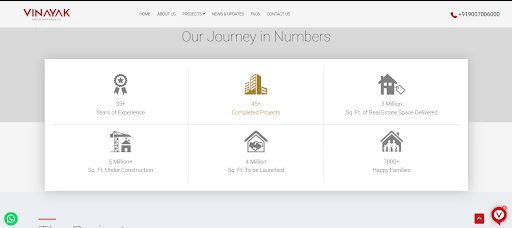
For a project this size, design isn't decoration. It's the difference between a buyer trusting the brand enough to book a visit and bouncing in ten seconds. We restructured the project pages around a gallery-first layout with embedded walkthroughs, moved RERA registration details and completion timelines above the fold, and simplified the enquiry flow to fewer steps. Every design choice was tested against one question: did it reduce drop-off before the form was submitted?
Website & Content
Real estate buyers research heavily before they ever call an agent, often around land records, legal documents, and locality growth potential rather than the project itself. We built SEO content around exactly those searches, including guides on khatian and plot verification and encumbrance certificates for West Bengal buyers, so the website could rank and bring in enquiries organically, not just through paid spend. We also published growth-potential content tied to Newtown's infrastructure upgrades, which kept the site relevant to buyers researching the area months after their first visit.
Social Media
Instead of treating social as a separate awareness channel, we ran it as a retargeting layer. Buyers who viewed a project page but didn't fill a form saw follow-up content on Instagram and Facebook, seasonal buying-advantage posts, and project update reels, keeping the brand top-of-mind through a decision that usually takes weeks, not minutes.
Before vs After: What We Learned About Real Estate Ad Spend
This is the part every developer and broker should read carefully, because it's counterintuitive.
What Underperformed: Broad, Generic Campaigns
Wide-net Meta and Google campaigns targeting terms like "flats for sale in Kolkata" looked fine on impressions and clicks. They looked bad on cost per site visit. Here's why:
Low-intent matching - Broad targeting pulls in people browsing dozens of projects at once, most of whom were never a fit for that specific development.
No urgency in follow-up - A form filled from a cold ad often went cold within hours without an immediate response.
High cost; low conversion - Real estate keywords are expensive, and broad targeting meant paying premium rates for enquiries that rarely converted to a booked visit.
What Worked
Locality and configuration-specific landing pages. For Somani Realtors, we replaced one generic "contact us" page with landing pages segmented by locality, budget, and BHK configuration. Matching the ad, the page, and the buyer's exact search intent brought cost per qualified lead down noticeably.
Instant Forms tied to launch timing. For Sugam Homes, we used Meta's Instant Forms for early-bird inquiries around specific project launches, paired with Google Search campaigns targeting bottom-of-funnel keywords, so spend concentrated on buyers who already had genuine intent instead of cold audiences.
WhatsApp-first follow-up. A large share of real estate inquiries in Kolkata happen over WhatsApp, not email. Integrating lead capture directly into WhatsApp and CRM workflows meant no inquiry sat unanswered overnight.
Organic content that compounds. Unlike ad spend, ranked SEO content on land records, legal documents, and locality guides kept bringing in enquiries months after publishing, at zero marginal cost per lead.
Check out our blog: Real Estate Sales Funnels: Transform Leads into Loyal Clients
Conclusion
The pattern held across every real estate developer and consultant we've worked with. Broad, generic campaigns generate clicks. Targeted, integrated systems generate booked site visits. Real estate lead generation isn't about picking one channel and hoping it works. It's about whether your performance marketing, website, design, and content are all pointed at the same buyer at the same moment in their decision, instead of working in isolation.
Why Trust Marko & Brando
We've directly run real estate lead generation for developers and consultants, including Vinayak Group, Somani Realtors, and Sugam Homes, covering performance marketing, UI/UX, website management, and social media, not a single-channel engagement.
Our team builds and executes across the full stack: paid media, design, SEO content, and marketing automation, which is what let us diagnose why broad campaigns underperformed instead of just reporting that they did.
This isn't theory. It's a documented approach from real developer clients, with channel-level reasoning any broker or developer can apply to their own funnel.
We name what didn't work as openly as what did. An agency that only shows you wins isn't showing you the whole picture.
If your project is generating enquiries that never turn into site visits, we've likely already solved that exact problem for a developer like yours.
Talk to Marko & Brando about your real estate funnel. Visit our Real Estate Marketing page to see how we build integrated lead gen systems for developers and brokers.
Frequently Asked Questions
How do I generate real estate leads that actually convert?
Pair targeted performance marketing (Meta and Google campaigns aimed at specific localities and budgets) with a fast website, WhatsApp-first follow-up, and Google Analytics tracking, so you can see which channel produces booked site visits, not just form fills.
Is there a way to get free lead generation for real estate?
Yes, to an extent. SEO content around what buyers actually research first, like land records and legal documents, along with organic social posting and referrals, generates leads without direct ad spend. It compounds slower than paid campaigns, so it works best alongside them, not instead of them.
What should I look for in a real estate lead generation agency?
Look for a real estate lead generation agency that understands long sales cycles, RERA compliance, and how buyers actually search locality by locality, not one running the same generic funnel across every industry it serves.
How is a real estate lead generation company different from a general ad agency?
A specialized real estate lead generation company builds campaigns, landing pages, and content around how property is actually bought, factoring in configuration, budget, and locality intent, instead of applying a generic e-commerce funnel to a high-trust, long-consideration purchase.
How long before real estate lead generation tactics show results?
Paid campaigns can start producing leads within days, but consistent, qualified lead flow usually builds over 60 to 90 days of testing and optimization. Organic content like SEO typically takes 3 to 6 months to compound but keeps producing enquiries long after that.

Article by
Marko & Brando
For businesses looking for impactful digital marketing services, Marko & Brando is the name to trust. Our data-driven strategies ensure maximum ROI, helping your brand reach new heights. Experience the power of digital transformation with our expertise.
Real Estate Lead Generation Guide: Tools, Tactics & Examples

Marko & Brando
September 24, 2026
Best Financial Services Advertising Strategy for Banks
Marko & Brando
September 20, 2026
What Is a Content Calendar? Examples and a Step-by-Step Guide
Marko & Brando
September 15, 2026

We Audited 30 Shopify Stores: Here's the Number One Conversion Killer
Marko & Brando
September 10, 2026