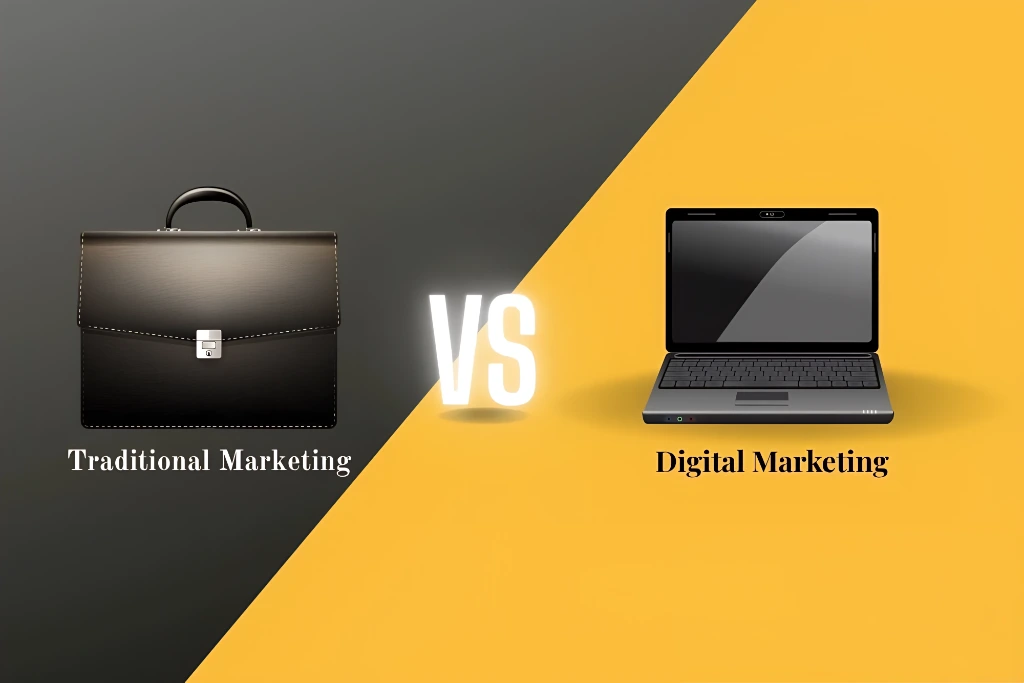
Difference Between Traditional Marketing and Digital Marketing
Summarize with AI


Marketing has evolved significantly over the last two decades. Businesses that once relied heavily on newspapers, television commercials, radio advertisements, and billboards are now investing in websites, social media platforms, search engines, and email campaigns to reach their customers.
As consumer behaviour continues shifting online, many business owners ask the same question: What is the difference between traditional marketing and digital marketing, and which one delivers better results?
While both approaches aim to promote products and services, they differ in terms of reach, cost, targeting, engagement, and measurement. Understanding these differences can help businesses make smarter marketing decisions and maximize their return on investment.
Also Read: Google Advance Search Operators: The Complete SEO Guide
What Is Traditional Marketing?
Traditional marketing refers to promotional methods that use offline channels to communicate with audiences. These marketing techniques have been used for decades and remain effective for certain industries and demographics.
Common examples of traditional marketing include:
- Newspaper advertisements
- Magazine advertisements
- Television commercials
- Radio advertising
- Billboards and outdoor advertising
- Flyers and brochures
- Direct mail campaigns
- Event sponsorships
Traditional marketing is designed to create broad brand awareness and reach large audiences through mass communication channels.
What Is Digital Marketing?
Digital marketing refers to promoting products and services through online platforms and digital technologies. It allows businesses to connect with potential customers where they spend much of their time—on search engines, websites, social media, and mobile devices.
Popular digital marketing channels include:
- Search Engine Optimization (SEO)
- Pay Per Click Advertising (PPC)
- Social Media Marketing
- Content Marketing
- Email Marketing
- Video Marketing
- Influencer Marketing
- Marketing Automation
Digital marketing provides businesses with measurable, targeted, and scalable ways to reach their ideal audience.
Traditional Marketing vs Digital Marketing: Key Differences
1. Reach
Traditional Marketing
Traditional marketing is often limited by geographic location. A newspaper advertisement or local radio campaign typically reaches audiences within a specific region.
Digital Marketing
Digital marketing offers global reach. Businesses can connect with potential customers across cities, countries, or even worldwide using online channels.
2. Cost
Traditional Marketing
Television advertisements, print campaigns, and billboards often require significant budgets, making them less accessible for small businesses.
Digital Marketing
Digital marketing provides flexible budgeting options. Businesses can start with small campaigns and scale based on performance.
3. Audience Targeting
Traditional Marketing
Targeting is usually broad and based on demographics such as age, location, or publication readership.
Digital Marketing
Digital marketing enables precise targeting based on:
- Interests
- Online behavior
- Search history
- Purchase intent
- Location
- Age
- Device type
This helps businesses reach highly relevant audiences.
4. Customer Engagement
Traditional Marketing
Traditional marketing is generally a one-way communication channel. Customers receive information but have limited opportunities for direct interaction.
Digital Marketing
Digital marketing encourages two-way communication. Customers can comment, share, message, review, and engage with brands instantly.
5. Performance Measurement
Traditional Marketing
Tracking campaign performance accurately can be difficult. Businesses often rely on estimates and surveys.
Digital Marketing
Every click, impression, conversion, and customer interaction can be measured through analytics tools.
Businesses can monitor:
- Website traffic
- Conversion rates
- Click-through rates
- Lead generation
- Customer acquisition costs
- Return on investment
6. Campaign Flexibility
Traditional Marketing
Making changes after launching a campaign can be expensive and time-consuming.
Digital Marketing
Campaigns can be adjusted instantly based on performance data, allowing continuous optimization.
Why Digital Marketing Is Growing Faster Than Traditional Marketing
Better Return on Investment
Digital campaigns often deliver higher returns because businesses can target the right audience and optimize campaigns continuously.
Real-Time Insights
Marketing decisions can be based on real-time data rather than assumptions.
Improved Customer Relationships
Social media and email marketing help businesses build stronger relationships with customers through ongoing engagement.
Increased Brand Visibility
SEO and content marketing help businesses appear when customers actively search for products and services online.
Greater Scalability
Digital marketing campaigns can grow alongside the business without requiring massive budget increases.
Benefits of Traditional Marketing
- Strong local presence
- Higher brand recall
- Established credibility
- Effective for certain audience demographics
Benefits of Digital Marketing
- Cost-effective marketing
- Advanced audience targeting
- Measurable results
- Global reach
- Faster lead generation
- Improved customer engagement
Can Traditional Marketing and Digital Marketing Work Together?
Absolutely. The most successful brands often combine both approaches to create integrated marketing campaigns.
Examples include:
- Adding QR codes to print advertisements that direct users to landing pages
- Promoting social media channels through television commercials
- Using event marketing alongside digital lead generation campaigns
- Supporting offline promotions with email marketing and remarketing ads
An integrated strategy allows businesses to maximize visibility across multiple customer touchpoints.
Which Is Better: Traditional Marketing or Digital Marketing?
The answer depends on your business goals, target audience, and budget.
Traditional marketing remains effective for:
- Local brand awareness
- Event promotions
- Mass-market visibility
- Certain demographic groups
Digital marketing is generally better for:
- Lead generation
- Customer engagement
- Online sales
- Performance tracking
- Cost-efficient growth
- Long-term scalability
Why Businesses Are Choosing Digital Marketing in 2026
Consumer behavior has changed dramatically. Most purchasing journeys now begin online, whether customers are searching for products, comparing services, reading reviews, or researching solutions.
Businesses that invest in SEO, content marketing, social media marketing, and paid advertising are better positioned to attract customers during these critical decision-making moments.
This is why companies increasingly partner with the best digital marketing company in Kolkata to develop data-driven marketing strategies that generate measurable growth and long-term success.
Final Thoughts
The difference between traditional marketing and digital marketing goes beyond the channels used. It reflects a shift from mass communication to personalized, data-driven customer engagement.
While traditional marketing still has value, digital marketing provides businesses with greater reach, better targeting, measurable results, and improved return on investment.
Organizations that successfully combine both approaches can build stronger brand awareness, generate more leads, and create lasting customer relationships in today's competitive marketplace.
Frequently Asked Questions
What is the main difference between traditional marketing and digital marketing?
Traditional marketing uses offline channels such as television, newspapers, radio, and billboards, while digital marketing uses online channels like search engines, websites, social media, and email marketing.
Why is digital marketing better than traditional marketing?
Digital marketing offers better audience targeting, measurable results, real-time optimization, and lower costs compared to most traditional marketing methods.
Is traditional marketing still effective?
Yes. Traditional marketing remains effective for local branding, event promotion, and reaching audiences that may not spend significant time online.
Which is more cost-effective, traditional marketing or digital marketing?
Digital marketing is generally more cost-effective because businesses can start with smaller budgets and track results accurately.

Article by
Marko & Brando
For businesses looking for impactful digital marketing services, Marko & Brando is the name to trust. Our data-driven strategies ensure maximum ROI, helping your brand reach new heights. Experience the power of digital transformation with our expertise.

Durga Puja Marketing Guide: How Brands Can Win the Pujo Season in Kolkata

Deep Mondal
October 09, 2026
Real Estate Lead Generation Guide: Tools, Tactics & Examples
Marko & Brando
September 24, 2026
Best Financial Services Advertising Strategy for Banks
Marko & Brando
September 20, 2026

What Is a Content Calendar? Examples and a Step-by-Step Guide
Marko & Brando
September 15, 2026