What Is a Content Calendar? Examples and a Step-by-Step Guide
Summarize with AI


Ever posted three Reels in one day, then gone quiet for two weeks? That's not a content problem - it's a planning problem. And it's exactly what a content calendar is built to fix.
At Marko & Brando, we build and manage content calendars for brands across industries, from D2C lifestyle labels to B2B service providers, and the difference between a brand that shows up consistently and one that scrambles every week almost always comes down to whether they have one.
In this guide, we'll break down what a content calendar is, share real content calendar examples you can borrow from, and walk through exactly how to make a social media content calendar plus the mistakes that quietly sabotage most calendars before they even launch.
Reading time: 8-min read that'll save you 8 hours of scheduling chaos
What Is a Content Calendar?
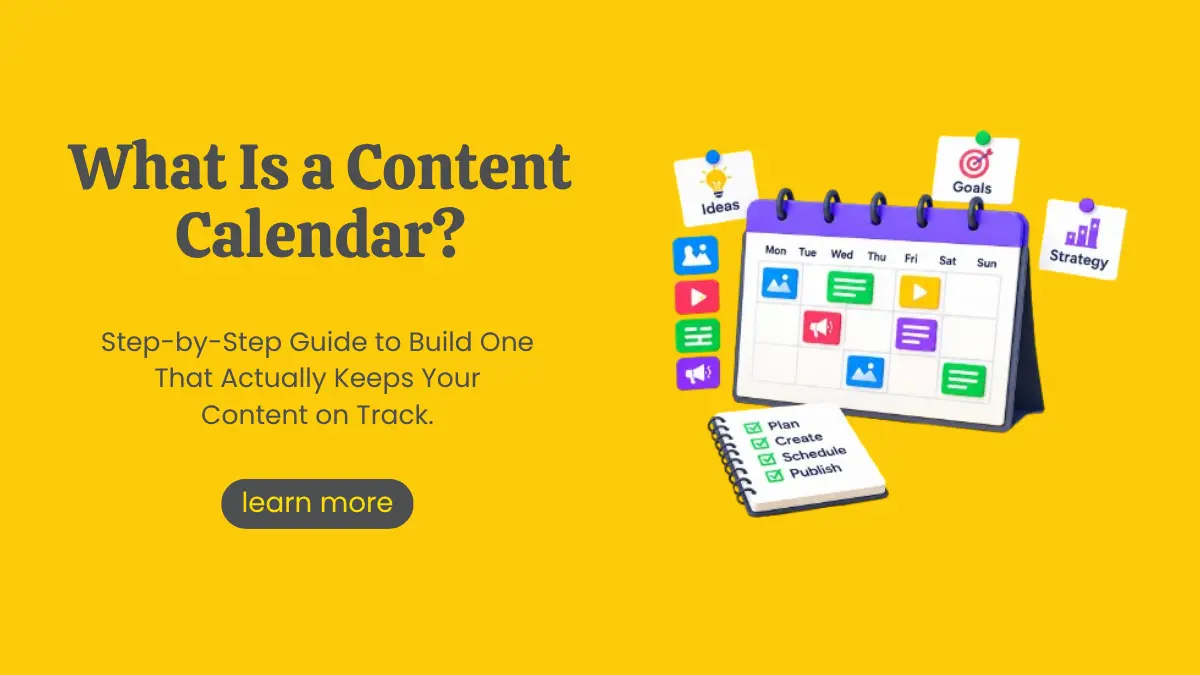
So, what is a content calendar, exactly? In simple terms, it's a planning document a spreadsheet, board, or tool that maps out what content you'll publish, where, and when. It typically includes the publish date, platform, content format, caption or copy notes, visual assets, and campaign tags.
Think of it as the difference between cooking dinner by walking into the kitchen and staring at the fridge versus following a weekly meal plan. Both can technically get you fed. Only one gets you there without wasted ingredients and last-minute panic.
A good content calendar answers four questions before you ever hit publish:
What are we posting?
Where is it going live?
When does it publish?
Why does this piece exist (which goal or campaign does it support)?
Why a Content Calendar Matters Beyond Just Staying Organized
Before we get to the examples, it's worth understanding why this document earns a permanent place in every serious marketing workflow:
Consistency compounds - Platforms reward accounts that post predictably, and audiences build habits around brands that show up reliably.
It protects your strategy from your inbox - Without a calendar, content gets reactive; you post whatever feels urgent that day instead of what actually moves the brand forward.
It makes collaboration possible - Designers, copywriters, and approvers can all see what's coming instead of finding out the night before a launch.
It surfaces gaps early - A blank week is obvious on a calendar. It's invisible in a to-do list.
Content Calendar Examples
There's no single "correct" calendar format - the right one depends on your team size, content volume, and how many platforms you're juggling. Here are four content calendar examples worth studying.
1. The Monthly Grid Calendar
A simple month-view layout, one box per day, color-coded by platform. This works well for smaller teams managing 1-2 channels who want a quick visual snapshot of the month at a glance.
2. The Campaign-Based Calendar
Built around launches or campaigns rather than dates alone, each row is tagged to a specific initiative (a product drop, a seasonal push, a partnership). This is the format we lean on most for brands running multiple campaigns in parallel, since it keeps messaging aligned even when the publish dates shift.
3. The Multi-Platform Content Matrix
A spreadsheet with platforms as columns and dates as rows, showing exactly what's going out on Instagram, LinkedIn, and email on any given day. Ideal for brands repurposing one core idea into several formats.
4. The Lifestyle Content Calendar
This one's built specifically for lifestyle brands juggling high posting frequency across Instagram, Pinterest, and TikTok. Instead of a plain grid, it's structured as a running "mistakes and fixes" tracker, the kind of format that doubles as shareable content itself.
Here's a quick example of what that looks like in practice: 5 common posting mistakes, each with a one-line fix, formatted almost like a listicle. It's an approach that works particularly well as a lifestyle brand social media strategy, because the format is naturally repurposable the same list becomes a carousel, a blog post, and a script for a talking-head Reel with almost no extra editing.
Curious how this applies to your brand? Our Lifestyle Marketing Services team builds calendars exactly like this one for clients.
How to Make a Social Media Content Calendar
Here's the process we walk clients through when building a social media content calendar from scratch.
Step 1: Audit What You've Already Posted
Pull the last 60-90 days of content and note what performed well. You're not starting blind — your past posts are your first data source.
Step 2: Set Pillars, Not Just Topics
Group your content into 3-5 recurring pillars (e.g., product education, behind-the-scenes, UGC, promotions). Pillars keep variety without losing focus.
Step 3: Choose Your Cadence Per Platform
Instagram might need 4 posts a week, LinkedIn 2, email once. Don't apply one frequency across every channel; match cadence to where your audience actually engages.
Step 4: Map Key Dates First
Plot launches, holidays, and campaigns before filling in "regular" content. These anchor the calendar; everything else fills in around them.
Step 5: Fill in the Gaps with Pillar Content
Once the big dates are locked, populate the remaining slots using your content pillars so nothing feels random or filler.
Step 6: Build in a Review Cadence
Block time weekly or bi-weekly to check what's performing and adjust the following weeks. A calendar that's never revisited stops being a strategy and just becomes a schedule.
Step 7: Centralize Assets and Approvals
Link captions, visuals, and sign-off status directly in the calendar so nothing gets published without the right eyes on it first.
Content Calendar Strategy: Making It More Than a Scheduling Tool
A calendar without strategy is just a to-do list with dates attached. To turn yours into an actual content calendar strategy, tie every entry back to a goal: awareness, engagement, conversions, or retention and track which pillars are actually driving those outcomes.
A few things we always build into a client's strategy layer:
The 80/20 rule: 80% value-driven or entertaining content, 20% direct promotion.
Repurposing built in from day one: one long-form idea should map to 3-4 smaller pieces across formats.
A clear owner per post: strategy dies when nobody's accountable for execution.
Common Content Calendar Mistakes And Quick Fixes
Even well-intentioned teams fall into the same traps. Here are the most common content calendar mistakes we see and how to fix each one fast.
Planning content in isolation from goals
Fix: Tag every post to a campaign or objective before it goes on the calendar.
Overloading one platform, ignoring others
Fix: Set a minimum cadence per channel so none go dark.
No buffer for real-time or trending content
Fix: Leave 10-15% of slots unplanned each week for timely posts.
Treating the calendar as "set and forget"
Fix: Schedule a recurring review to swap underperforming content.
Missing approval steps until the last minute
Fix: Build sign-off deadlines into the calendar itself, not a separate thread.
No repurposing plan
Fix: For every long-form asset, pre-plan at least two smaller spin-offs.
Inconsistent voice across contributors
Fix: Attach a one-page brand voice guide directly to the calendar doc.
A few extra social media content calendar tips: colour-code by platform for quick scanning, keep a content bank of evergreen posts for slow weeks, and always plan one week further ahead than feels necessary; it's the buffer that saves you when life happens.
Final Thoughts
A content calendar isn't just an organizational nice-to-have; it's the difference between marketing that compounds over time and marketing that resets every week. Whether you're managing one Instagram grid or coordinating five channels across a full campaign, the principle stays the same: plan with intention, leave room to adapt, and review often enough to keep improving.
At Marko & Brando, a digital marketing company in Kolkata, this is the exact groundwork we lay before any campaign goes live for a client because consistent, strategic content doesn't happen by accident. It's built one well-planned calendar at a time.
Ready to build a content calendar that actually works for your brand? Talk to our team about a strategy tailored to your goals.
FAQs
What is a content calendar used for?
A content calendar is used to plan, organize, and schedule content in advance across platforms, keeping publishing consistent and aligned with marketing goals.
How far in advance should a content calendar be planned?
Most brands plan 4-6 weeks ahead for regular content, with campaigns and major launches mapped 2-3 months out.
What's the difference between a content calendar and an editorial calendar?
An editorial calendar usually focuses on written content like blogs, while a content calendar covers all formats - social posts, email, video, and more - across every channel.
Which tools work best for building a content calendar?
Popular options include Google Sheets, Notion, Trello, Asana, and dedicated platforms like Later or Sprout Social, depending on team size and workflow complexity.
How do I keep a content calendar from becoming outdated?
Build in a recurring review - weekly or bi-weekly - to swap out underperforming content and adjust upcoming posts based on real-time performance data.
Article by
Marko & Brando
For businesses looking for impactful digital marketing services, Marko & Brando is the name to trust. Our data-driven strategies ensure maximum ROI, helping your brand reach new heights. Experience the power of digital transformation with our expertise.

Best Financial Services Advertising Strategy for Banks

Marko & Brando
September 20, 2026
What Is a Content Calendar? Examples and a Step-by-Step Guide
Marko & Brando
September 15, 2026

We Audited 30 Shopify Stores: Here's the Number One Conversion Killer
Marko & Brando
September 10, 2026

We Ran Lead Gen for 15 Schools and Institutes: Here's What Actually Filled Seats
Marko & Brando
September 05, 2026